
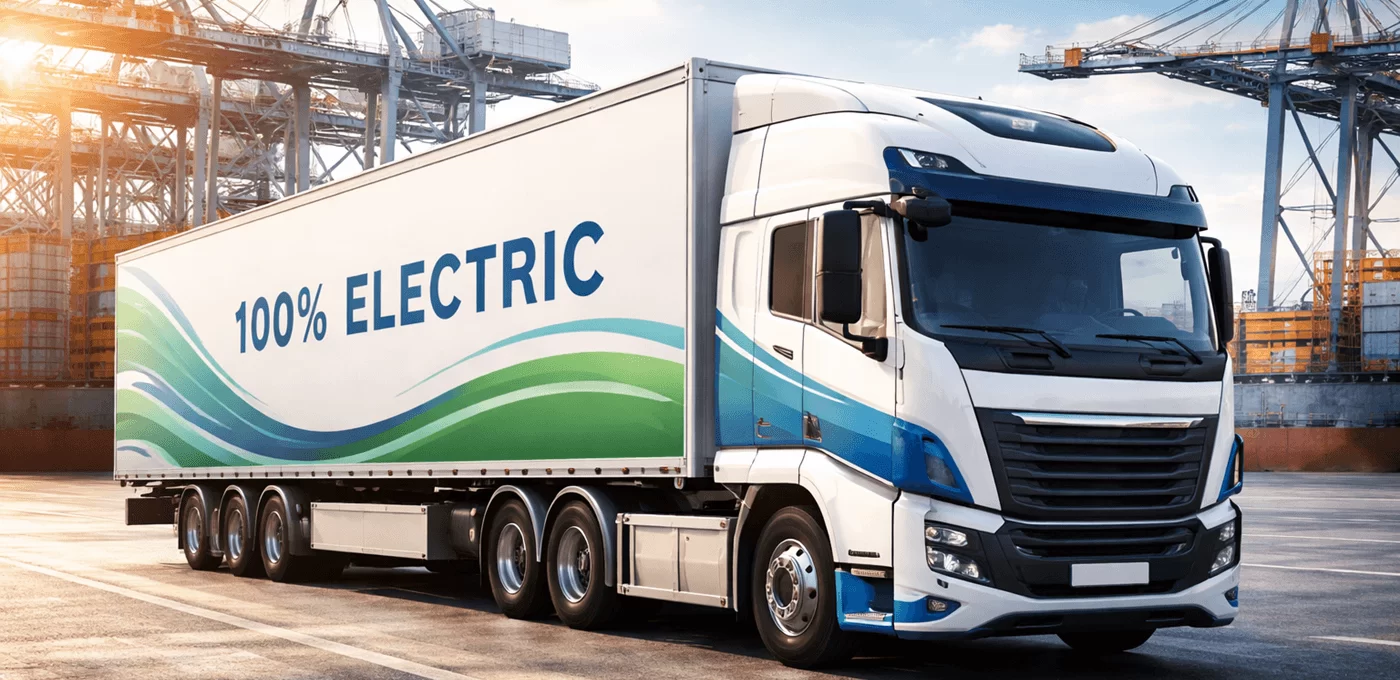
Electric Heavy Truck
category:
Electric Heavy Truck
project date:
July, 2021
Location:
Portugal
40-Ton Electric Heavy-Duty Truck Project in Portugal
The heavy-duty electric truck project in Portugal, powered by Brogen‘s integrated electric powertrain solution, represents a practical approach to electrifying high-load commercial vehicles.
This 40-ton electric truck platform integrates an advanced EV powertrain, electro-hydraulic steering, braking systems, and auxiliary electrification components.
This article outlines the project background, key engineering challenges, system configuration, and the technical solutions implemented for heavy-duty applications.
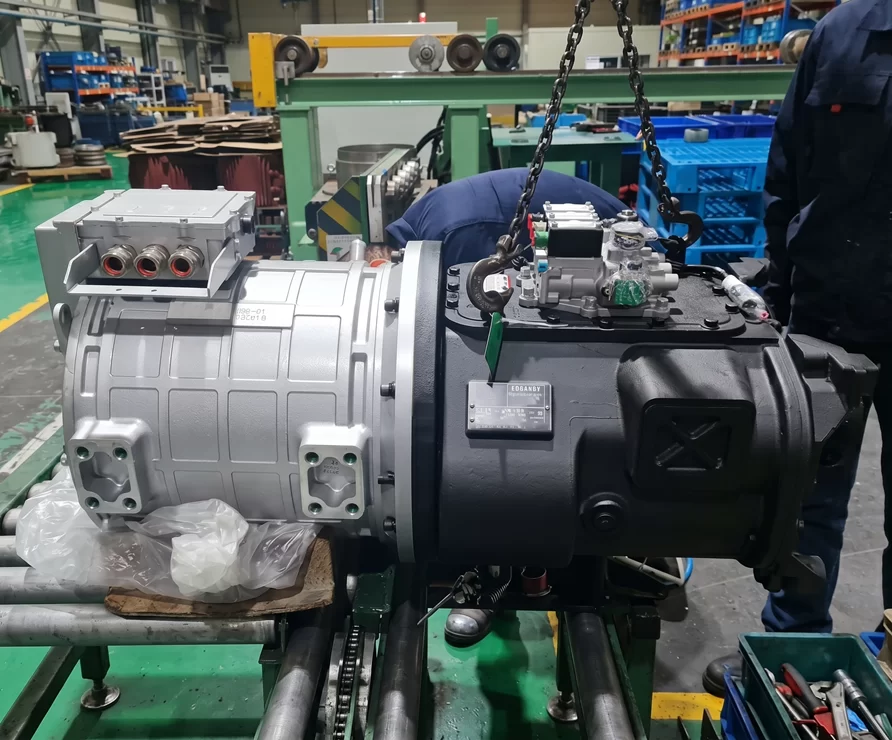
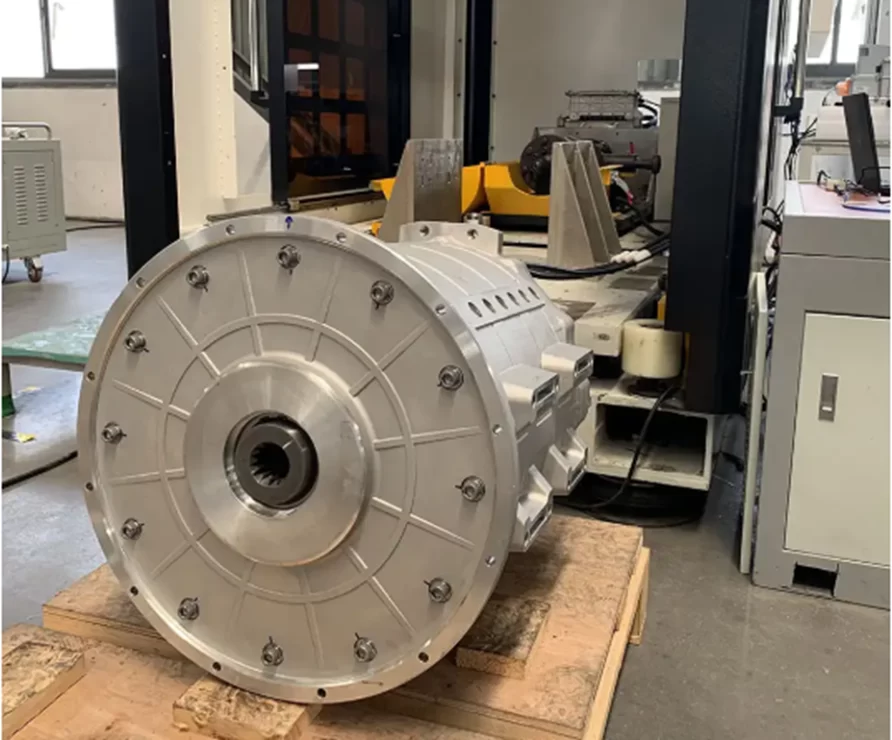
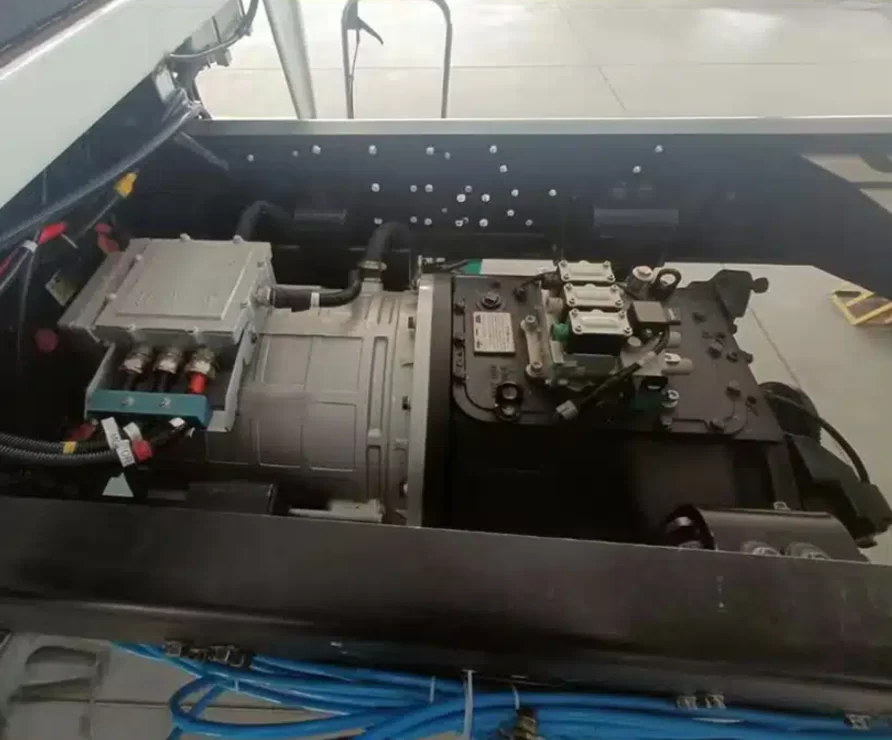
Project Overview
Project Background of the 40-Ton Heavy-Duty Electric Truck
In 2024. a Portugal-based new energy company initiated the development of its first 40-ton battery electric heavy-duty truck. While the parent company had strong experience in construction and energy storage, its newly established EV division required a complete and reliable electrification solution.
To support this transition, a full-scope engineering approach was provided, covering system design, component integration, and validation support.
Application Scope for Heavy-Duty Commercial Vehicles
The vehicle platform was designed for 26–40 ton heavy-duty transport applications, primarily targeting freight and logistics use cases in Portugal. The project focused on delivering a complete electrification solution, including propulsion, steering, braking, and auxiliary systems integration.
Engineering Challenges in Heavy-Duty Electric Truck Development
Technical Gaps in 40-Ton Electric Truck Development
As a first-generation electric heavy-duty platform, the client faced several engineering gaps, including:
- Electric drivetrain system design
- Motor and gearbox matching
- High-voltage architecture integration
- Thermal management strategy
- Vehicle-level control coordination
These challenges required a structured engineering approach to ensure system stability and performance.
Managing Cost and Time in Heavy-Duty Truck Electrification
Developing a heavy-duty electric truck from scratch typically involves high R&D investment and long validation cycles. For a new EV manufacturer, this can significantly impact time-to-market.
A modular and integrated system strategy was adopted to reduce development complexity, shorten iteration cycles, and improve overall engineering efficiency.
EV Powertrain System for the 40-Ton Heavy-Duty Electric Truck
Integrated 350 kW Electric Powertrain Architecture
At the core of the vehicle is a 2-in-1 integrated electric powertrain, combining the traction motor and gearbox, supported by an independent motor control unit.
This architecture enables a more compact layout while improving overall drivetrain efficiency and system reliability.
Powertrain Technical Specifications
| Parameter | Specification |
|---|---|
| Rated Power | 220 kW |
| Peak Power | 350 kW |
| Rated Voltage | 618 V |
| Rated Speed | 1400 rpm |
| Peak Speed | 3000 rpm |
| Rated Torque | 1500 N·m |
| Peak Torque | 2500 N·m |
| Rated Current | 340 A |
| Peak Current | 610 A |
| Cooling Method | Liquid Cooling |
| Protection Grade | IP67 / H |
| Application | 40-ton Heavy Truck |
This integrated architecture improves drivetrain efficiency, packaging flexibility, and system reliability.
Performance Requirements for Heavy-Duty Electric Trucks
Heavy-duty electric trucks require high torque output, stable thermal control, and reliable power delivery under continuous load conditions. The system was designed specifically to support long-distance freight and high-load operation scenarios.
Steering and Braking Systems in Heavy-Duty Electric Trucks
In heavy-duty electric trucks, auxiliary systems such as steering and braking play a critical role in overall vehicle safety, performance, and reliability.
Electro-Hydraulic Power Steering for Heavy-Duty Trucks
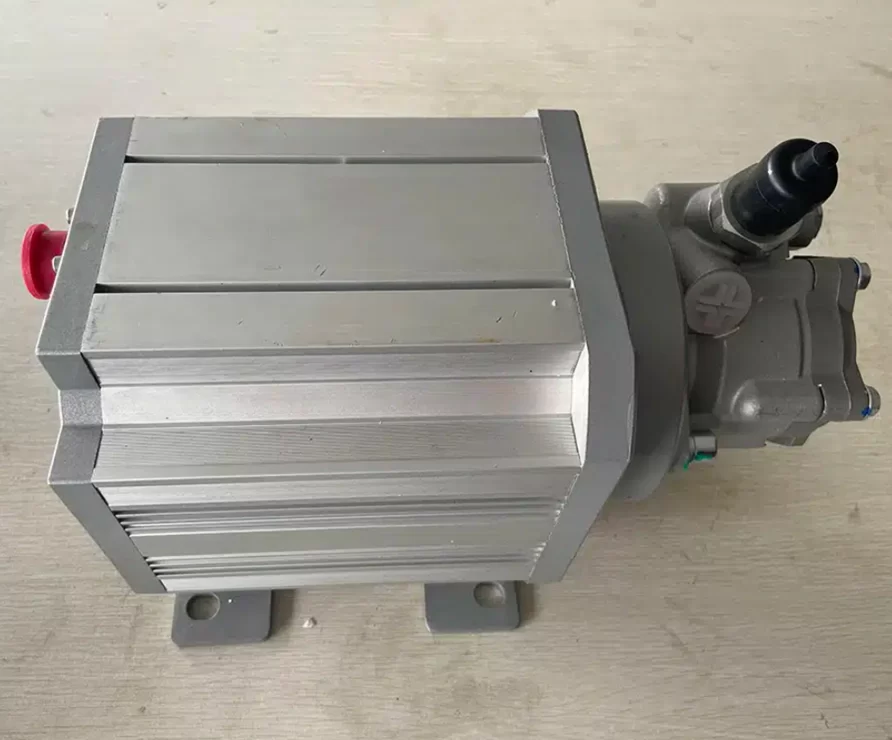
The vehicle uses a 4 kW electro-hydraulic power steering (EHPS) system, integrating motor, pump, ECU, and hydraulic components into a compact unit.
This design improves steering efficiency while reducing mechanical complexity and installation space.
| EHPS Parameter | Value |
|---|---|
| Rated Power | 4 kW |
| Rated Voltage | AC 380 V |
| Rated Torque | 34.2 N·m |
| Peak Torque | 85.6 N·m |
| Efficiency | 92% |
| Protection Class | IP67 |
Electric Air Brake Compressor for 40-Ton Applications
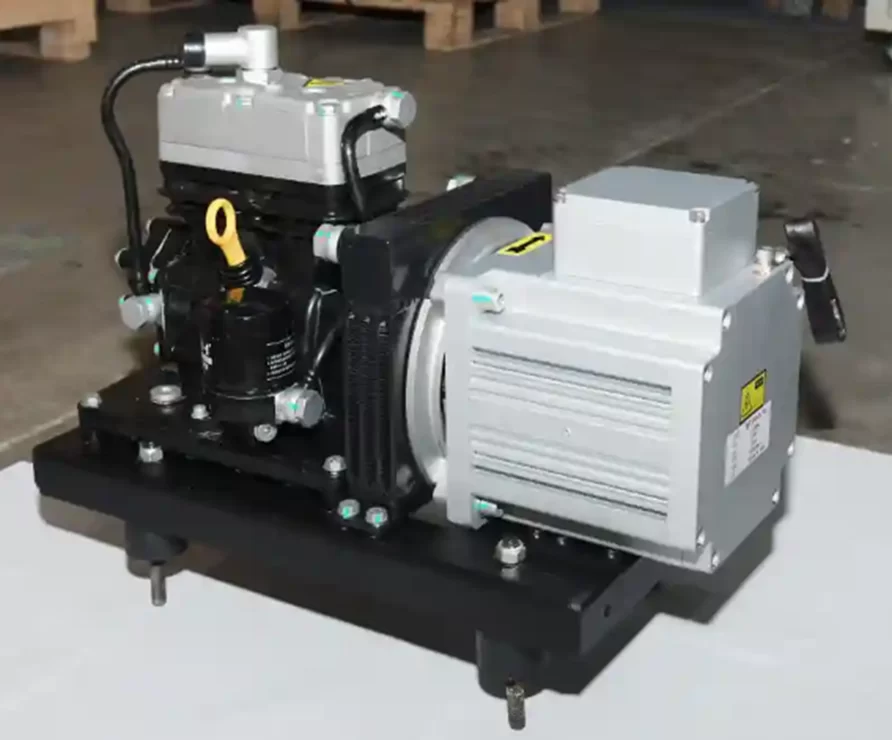
An oil-free 4 kW electric air brake compressor is used to support braking performance.
| Compressor Parameter | Value |
|---|---|
| Motor Power | 4 kW |
| Rated Flow | 380 L/min |
| Rated Pressure | 1 MPa |
| Max Pressure | 1.2 MPa |
| Protection | IP67 |
| Weight | 65 kg |
Compared to traditional systems, the key benefits this solution include:
- Stable compressed air output
- Reduced maintenance requirements
- Improved safety due to oil-free operation
- High reliability under heavy-load conditions
Auxiliary Systems Integration in Heavy-Duty Electric Truck Platforms
In heavy-duty electric trucks, auxiliary systems such as steering and braking play a critical role in overall vehicle safety, performance, and reliability.
3-in-1 Auxiliary Inverter for System Optimization
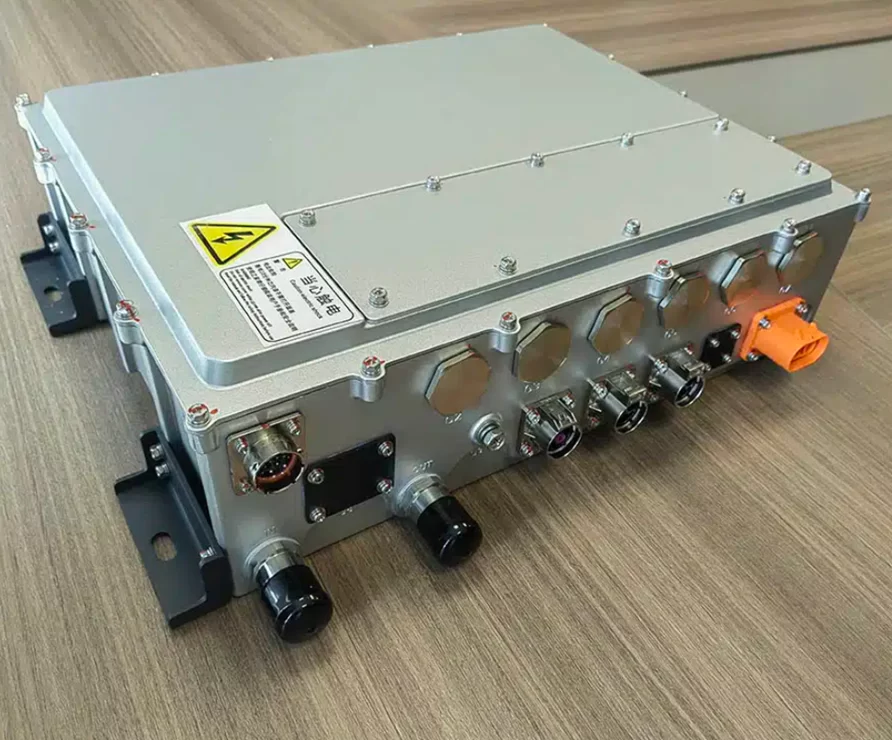
The platform integrates a 3-in-1 auxiliary inverter, combining:
- DC/DC conversion
- Oil pump control
- Air compressor control
This integration significantly reduces wiring complexity and system footprint.
Benefits of Integrated Electrical Architecture
The integrated electrical architecture streamlines multiple subsystems into a single, compact solution, reducing component count and optimizing space within the vehicle.
This improves electrical efficiency by minimizing energy losses and simplifies installation through fewer connections and interfaces.
The result is a more reliable system that is easier to maintain over time. In addition, the modular design supports platform scalability, allowing efficient adaptation across future heavy-duty electric truck models.
Conclusion: Built for Heavy-Duty Electrification
This 40-ton heavy-duty electric truck project in Portugal demonstrates how integrated EV system design can significantly reduce development complexity while maintaining high performance standards.
By combining powertrain, steering, braking, and auxiliary systems into a unified architecture, Brogen provides a scalable and efficient foundation for future heavy-duty electric vehicle development.
For OEMs entering the electric truck market, this case highlights the importance of system integration, modular design, and engineering collaboration in accelerating commercialization.
Disclaimer: Project details shown are representative examples. Specifications and performance may vary depending on customer requirements and operating conditions. Some information may be adjusted to protect confidential project data.
Frequently Asked Questions
What is the 40-ton electric truck project in Portugal about?
This project is a collaboration with a Portuguese energy company to develop its first fully electric 40-ton heavy-duty delivery truck, supporting the shift toward zero-emission freight transport and sustainable logistics operations.
What core systems were provided in this project?
The project includes an integrated electric powertrain system, electro-hydraulic power steering (EHPS), electric air brake compressor, and auxiliary power electronics, forming a complete EV drivetrain solution.
What challenges did the client face before working with Brogen?
The client lacked full EV engineering experience and needed support in system design, powertrain integration, and reducing R&D complexity for their first electric truck development.
Where can this electric truck solution be applied?
It is suitable for logistics transport, port operations, inter-city freight, and industrial distribution where high payload and long operating hours are required.
Contact me
Your email address will not be published. Required fields are marked *

 English
  Español
  Português do Brasil
  Türkçe
  日本語
日本語  Deutsch
  Français
  العربية
  한국어
한국어  Русский
  Italiano