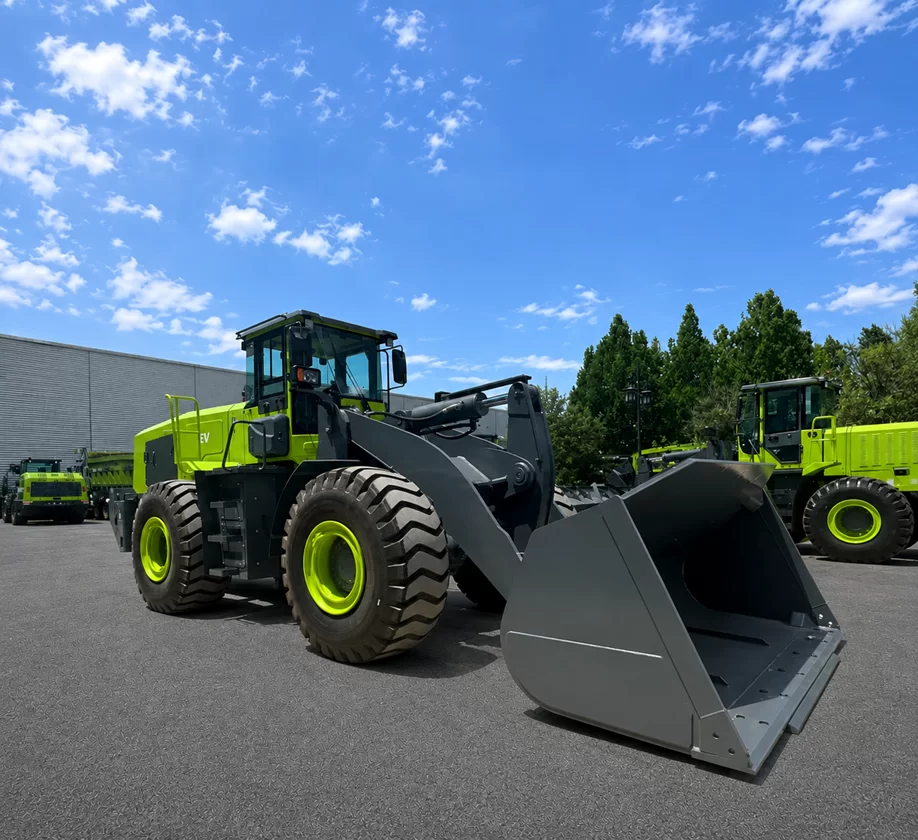
Electric Loader
category:
Electric Construction Vehicle
project date:
April, 2024
location:
Europe
10-Ton Electric Wheel Loader Motor Project
The electrification of heavy construction equipment is accelerating as OEMs seek lower operating costs, reduced emissions, and improved energy efficiency for off-road machinery applications.
This project features the electrification of a 10-ton wheel loader using Brogen’s high-voltage PMSM motor technology and integrated EV powertrain components.
Working together with the technical teams of supplier partners, Brogen supplied the traction motor, motor controller, and electric hydraulic drive system to support full-shift operation under demanding working conditions.
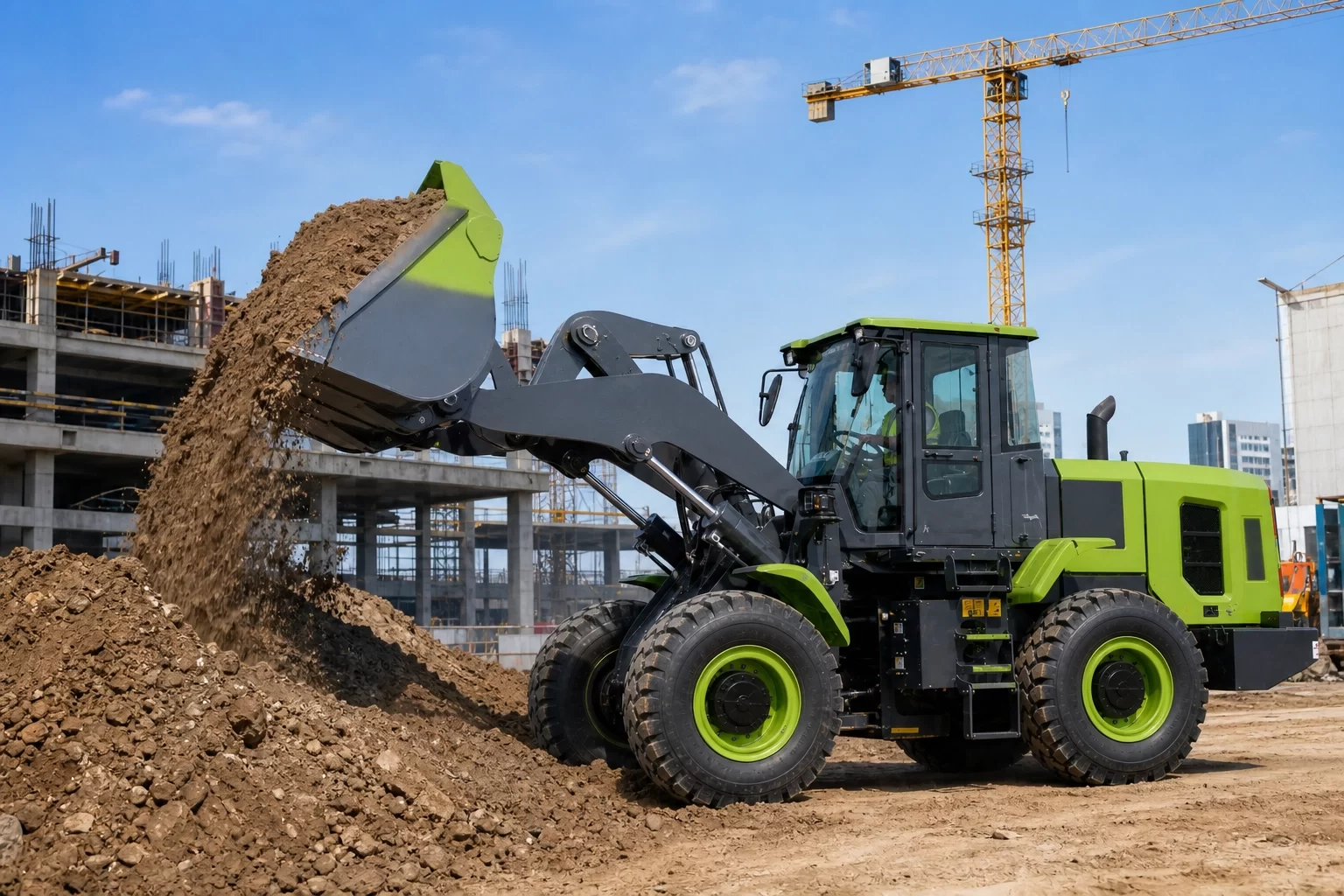
Project Overview: Transition to Electric Construction Vehicles
A construction equipment OEM in Southeast Asia approached Brogen to support the electrification of a 10-ton class wheel loader used in quarry, port logistics, and urban infrastructure projects.
The customer aimed to replace the original diesel powertrain with a fully electric drive system capable of maintaining the same bucket capacity, breakout force, and operating efficiency while significantly reducing fuel consumption and local emissions.
The OEM required the electric powertrain to achieve:
- Full-shift operation of 8–10 hours
- High peak torque during bucket loading
- Stable operation under heavy-duty working conditions
- Compatibility with the existing transmission and axle system
- Minimal modification to the original machine structure
- Reliable operation in dusty and high-vibration environments
Brogen’s sales team worked closely with the technical teams from our powertrain supplier partners to analyse the machine’s duty cycle and hydraulic load characteristics. Based on operating data collected from diesel-powered wheel loaders already operating in the field, a dual-motor electric architecture was selected to optimise efficiency and maintain productivity.
The final solution combined:
- A high-voltage PMSM traction motor
- A dedicated electric hydraulic pump motor
- An integrated motor controller (MCU)
- A 540 V DC battery platform
- CAN J1939 vehicle communication
As demand for electric construction machinery continues growing worldwide, high-efficiency PMSM electric motor systems are expected to become one of the key technologies enabling zero-emission off-road equipment. OEMs are increasingly adopting integrated EV powertrain solutions to reduce drivetrain complexity while improving overall system efficiency and operational reliability.
Key Challenges in Wheel Loader Electrification
Electrifying a heavy-duty wheel loader presents very different engineering requirements compared with on-road commercial vehicles. Wheel loaders operate under repeated peak torque demand, harsh environmental conditions, and continuous hydraulic load cycles.
High Peak Torque Requirement
Wheel loaders require extremely high torque during bucket breakout and loaded hill starts. Unlike highway vehicles with relatively stable operating loads, loaders repeatedly transition between heavy excavation work and short-distance travel.
To satisfy these operating conditions, the selected Brogen PMSM traction motor supports:
- 150 kW peak power
- 1,600 N·m peak torque
- 30-second overload capability
- High efficiency across partial-load operating ranges
This configuration enables the electric wheel loader to achieve performance comparable to diesel-powered machines during excavation and material handling operations.
The dual-motor architecture used in this project follows the same electrification principles already applied in Brogen’s off-highway vehicle solutions, where electric drive systems are optimised for construction equipment, mining machinery, and industrial vehicles operating under demanding operating conditions.
Full-Shift Endurance
A standard wheel loader operating shift typically involves 300–400 loading cycles. Achieving full-shift operation without mid-shift charging required careful optimisation of both motor efficiency and hydraulic power consumption.
Instead of oversizing the traction motor purely for peak power output, the powertrain was optimised for real-world duty-cycle efficiency. The selected PMSM platform maintains peak efficiency above 97%, helping maximise operating hours from the customer’s LFP battery system.
Hydraulic System Energy Consumption
Conventional diesel wheel loaders continuously drive the hydraulic pump directly from the engine, even when no hydraulic movement is required. This creates substantial idle energy losses.
To improve efficiency, the electric wheel loader adopts an independent electric hydraulic architecture using a dedicated PMSM hydraulic pump motor. Hydraulic flow is generated only when demanded by lifting, steering, or bucket movement.
This design significantly reduces unnecessary energy consumption during idle operation and partial-load conditions.
Harsh Operating Environment
Construction machinery operates continuously in environments involving:
- Dust exposure
- Water ingress
- Heavy vibration
- Mud and debris
- Wide ambient temperature variation
- Continuous heavy-load cycles
The Brogen motor and controller systems selected for this project are designed for heavy commercial and off-road applications, featuring:
- IP67 protection rating
- Water-cooled integrated housing
- IEC 60034 Class H insulation
- ISO 16750-3 vibration resistance
- Operating temperature range from −25°C to +55°C
To improve overall thermal stability, the traction motor adopts advanced cooling and efficiency optimisation technologies similar to those discussed in Brogen’s article on drive motor loss control technologies. Efficient thermal management is critical for maintaining continuous output during demanding off-road duty cycles.
Brogen Products Supplied for the Project
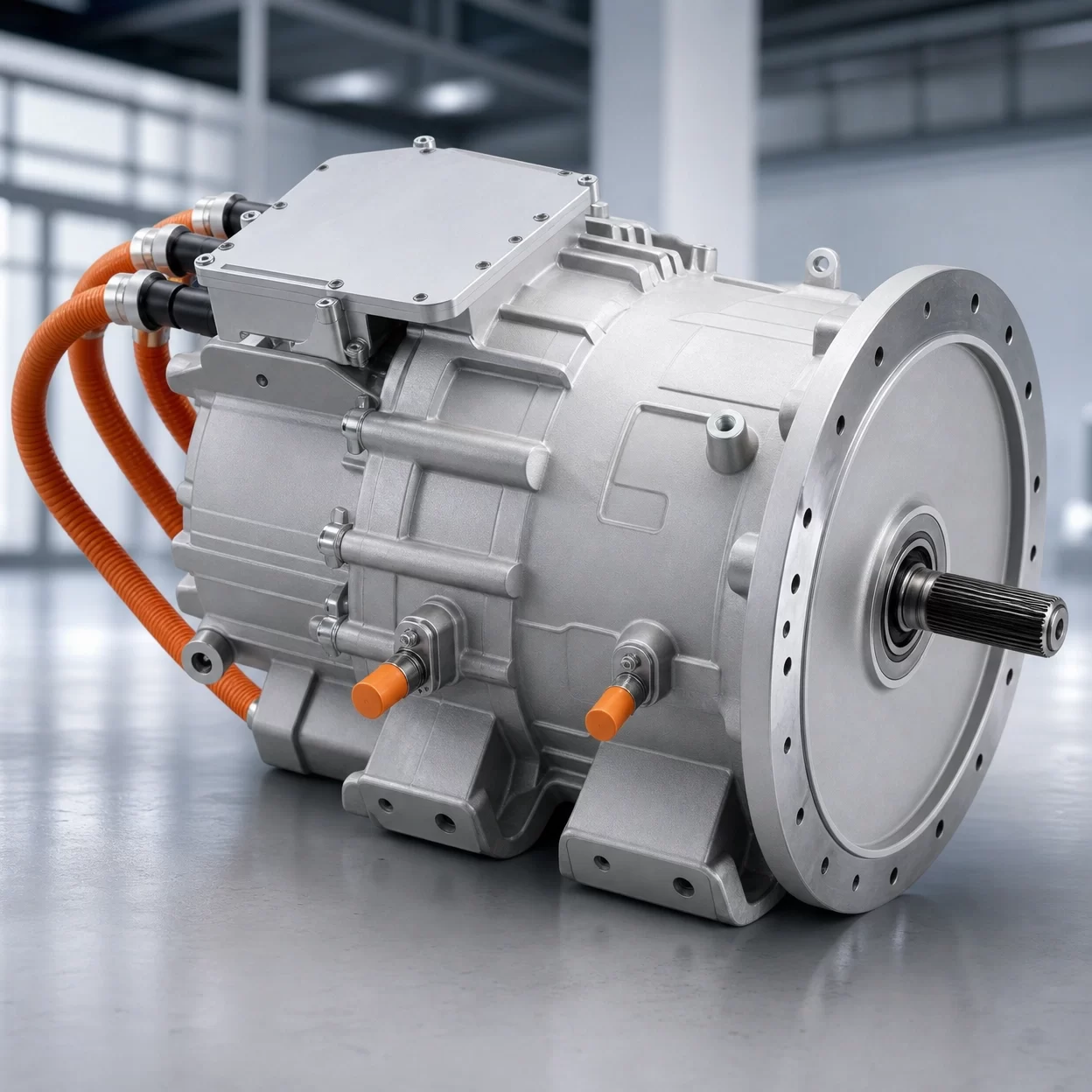
150 kW PMSM Traction Motor
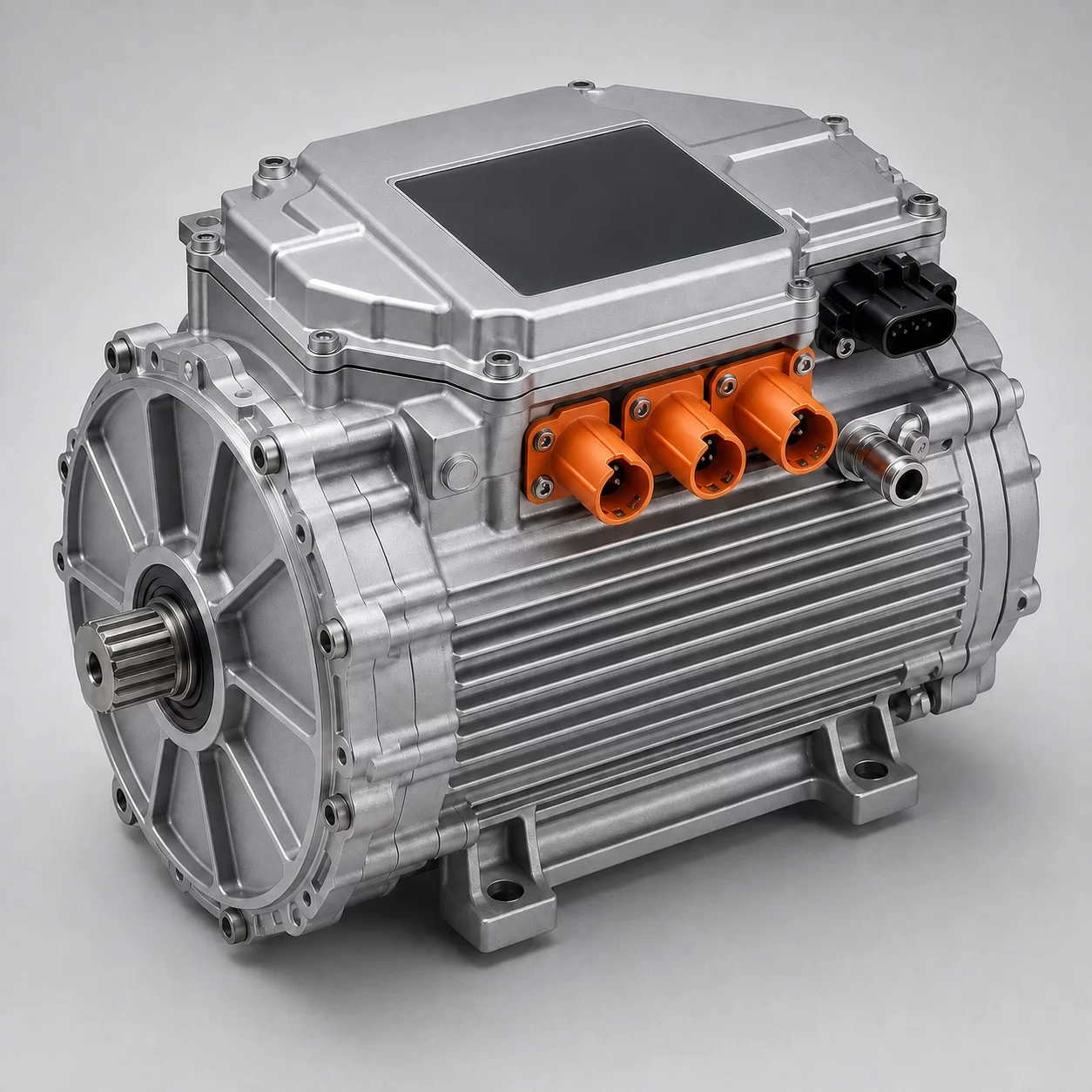
The primary traction drive unit is a water-cooled permanent magnet synchronous motor (PMSM) from Brogen’s commercial vehicle motor portfolio. The motor directly replaces the original diesel engine while retaining the OEM’s existing transmission and axle system.
The PMSM platform operates on a 540 V DC architecture commonly used in heavy-duty electric commercial vehicles and off-road machinery. This voltage platform enables compatibility with large-capacity LFP battery systems while maintaining manageable current levels under peak load conditions.
The motor’s compact integrated housing simplified installation within the original engine compartment and reduced the need for major chassis modifications.
PMSM Traction Motor Specifications
| Parameter | Value | Notes |
|---|---|---|
| Motor Type | PMSM (Interior PM) | Water-cooled |
| Rated Power | 90 kW | Continuous output |
| Peak Power | 150 kW | 30-second overload |
| Rated Torque | 800 N·m | Continuous |
| Peak Torque | 1,600 N·m | 30-second overload |
| Base Speed | 4,500 rpm | Rated operating speed |
| Maximum Speed | 6,000 rpm | Field weakening region |
| Nominal Voltage | 540 V DC | 450–720 V compatible |
| Peak Efficiency | >97% | Optimised partial-load efficiency |
| Cooling Method | Water/Glycol | Closed-loop cooling |
| Protection Rating | IP67 | IEC 60529 |
| Insulation Class | H (180°C) | IEC 60034 |
| Communication | CAN 2.0B / J1939 | Vehicle integration |
| Operating Temperature | −25°C to +55°C | Heavy-duty environment |
Note: Final specifications vary according to application and duty-cycle requirements.
Brogen Products Supplied for the Project
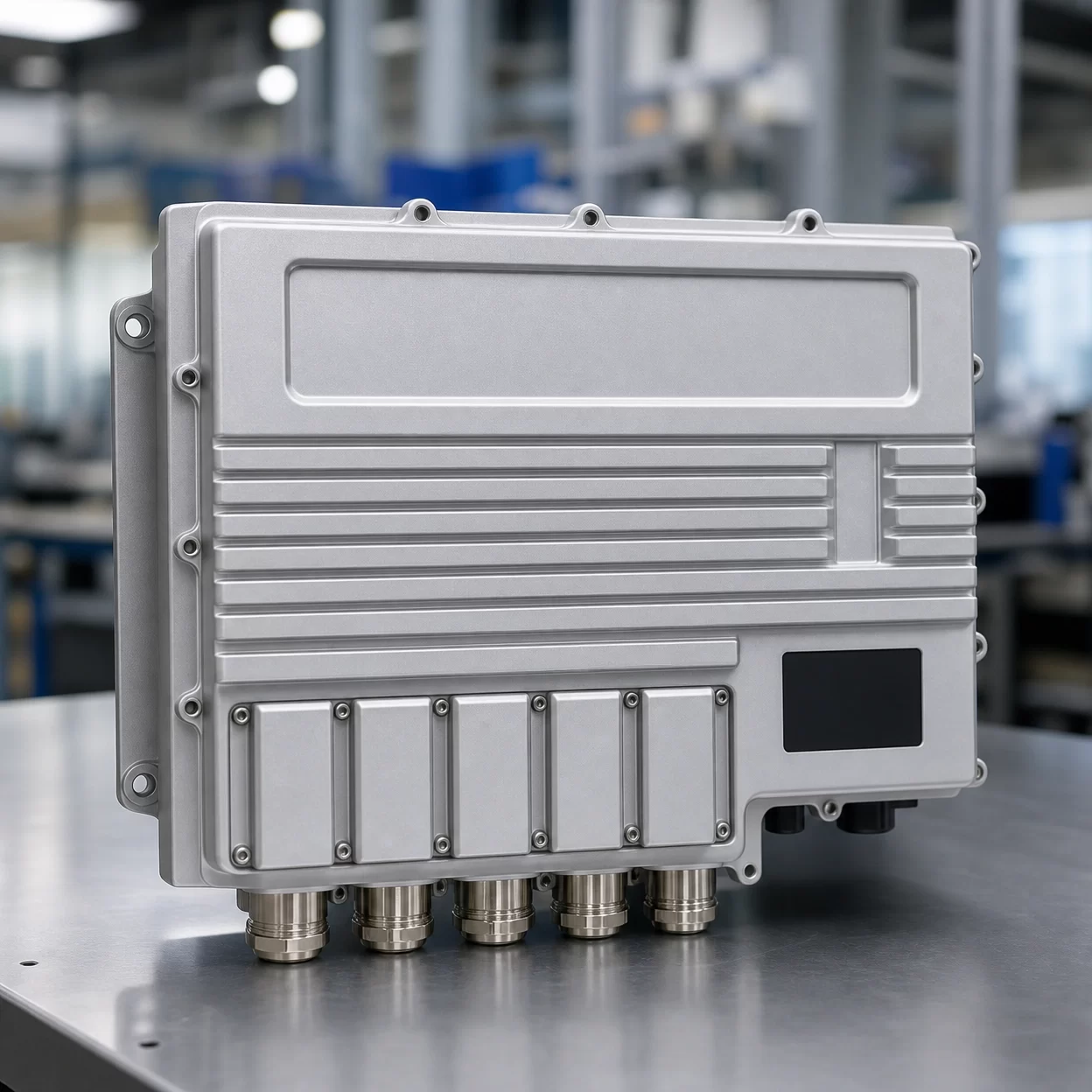
Integrated Motor Controller (MCU)
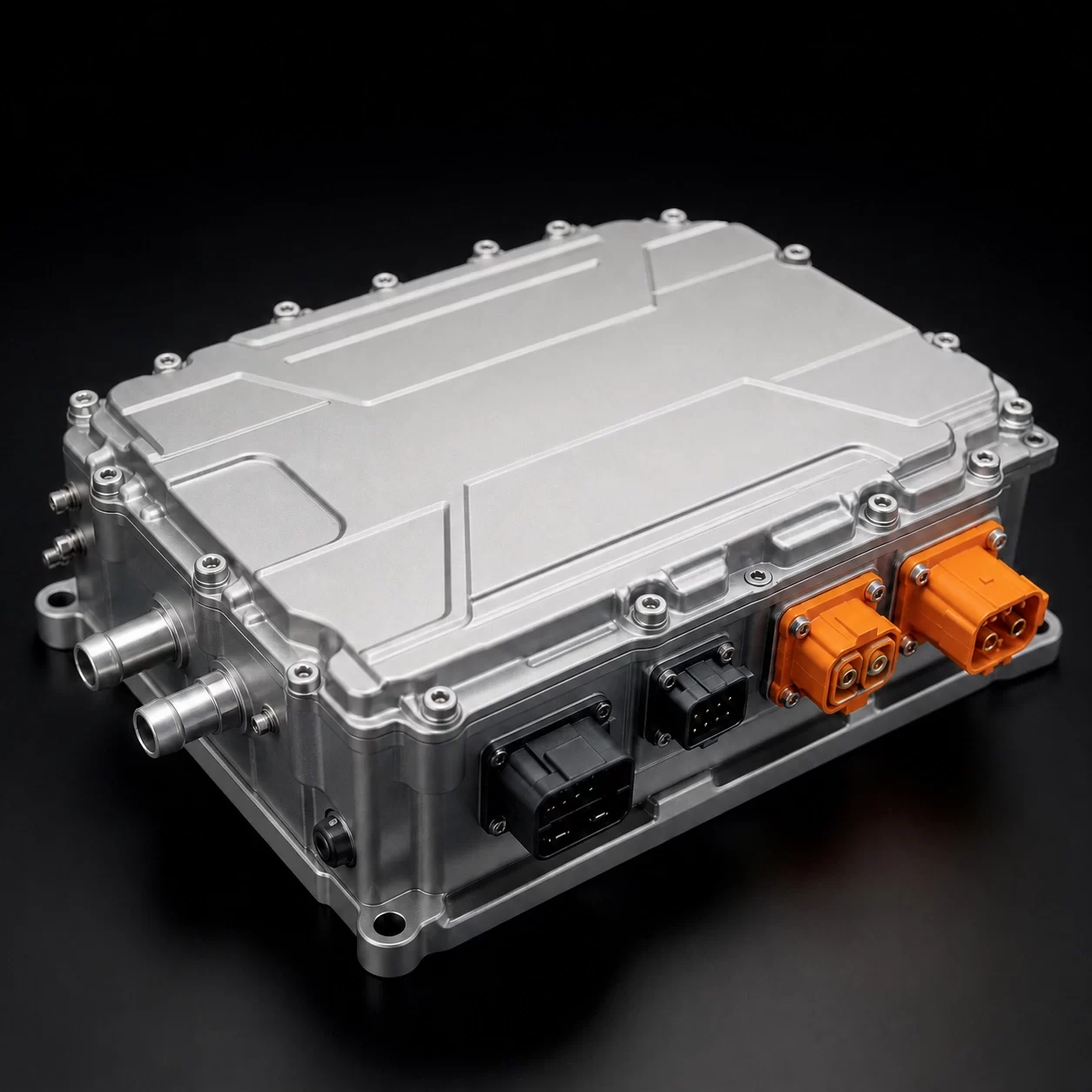
The project uses a standalone high-voltage motor controller integrated into the wheel loader’s vehicle control architecture through CAN J1939 communication.
The MCU manages:
- Traction motor torque control
- Hydraulic pump motor operation
- Regenerative braking
- Thermal protection
- System diagnostics
- Communication with the vehicle control unit (VCU)
Field-oriented control (FOC) algorithms were adopted to improve low-speed controllability and torque response accuracy, both of which are critical for heavy construction equipment applications.
The electric drive architecture also benefits from integrated controller technologies commonly used in modern all-in-one electric drive systems, where compact system integration improves packaging efficiency and simplifies OEM installation.
45 kW Hydraulic Pump Motor
The hydraulic system is powered by a dedicated 45 kW PMSM motor operating from the same 540 V DC platform.
Unlike conventional engine-driven hydraulic pumps, the electric hydraulic architecture allows hydraulic flow generation only when demanded by lifting, steering, or auxiliary functions. This improves overall efficiency while reducing idle energy consumption.
The dedicated hydraulic motor powers:
- Bucket lifting
- Loader arm movement
- Steering hydraulics
- Auxiliary hydraulic functions
Separating traction and hydraulic power delivery also eliminates power competition between machine travel and working operations.
Brogen’s experience in commercial vehicle electrification allows the company to support OEMs with scalable electric powertrain systems for commercial vehicles and off-road machinery applications using proven high-voltage drivetrain technologies.
Brogen Products Supplied for the Project
Dual-Motor Architecture
The wheel loader adopts a dual-motor configuration consisting of:
- A traction PMSM connected to the original transmission
- A dedicated hydraulic pump motor
Both systems operate from a shared 540 V DC bus supplied by the battery system.
Compared with single-motor architectures, this layout provides several advantages:
- Independent control of traction and hydraulics
- Improved energy efficiency
- More stable hydraulic response
- Reduced peak current fluctuation
- Improved operator control during simultaneous drive and lift operation
This architecture is widely considered one of the most practical electrification approaches for medium and large off-road machinery.
Regenerative Braking
Regenerative braking is active during:
- Vehicle deceleration
- Downhill travel
- Low-load coasting
Recovered braking energy is returned to the battery system, helping extend operating hours and reduce total energy consumption.
During initial field testing at a port logistics site, regenerative energy recovery contributed approximately 12–15% of total discharged energy under typical operating conditions.
CAN J1939 Vehicle Integration
The Brogen powertrain system communicates with the OEM’s vehicle control unit using standard CAN J1939 protocols widely adopted in commercial vehicle and construction equipment applications.
The open communication structure simplified integration and allowed the OEM software team to access:
- Motor speed
- Torque demand
- Temperature data
- Fault diagnostics
- Battery state-of-charge information
- Power limitation status
This approach reduced integration complexity while maintaining compatibility with the customer’s existing machine control strategy.
Field Validation Results
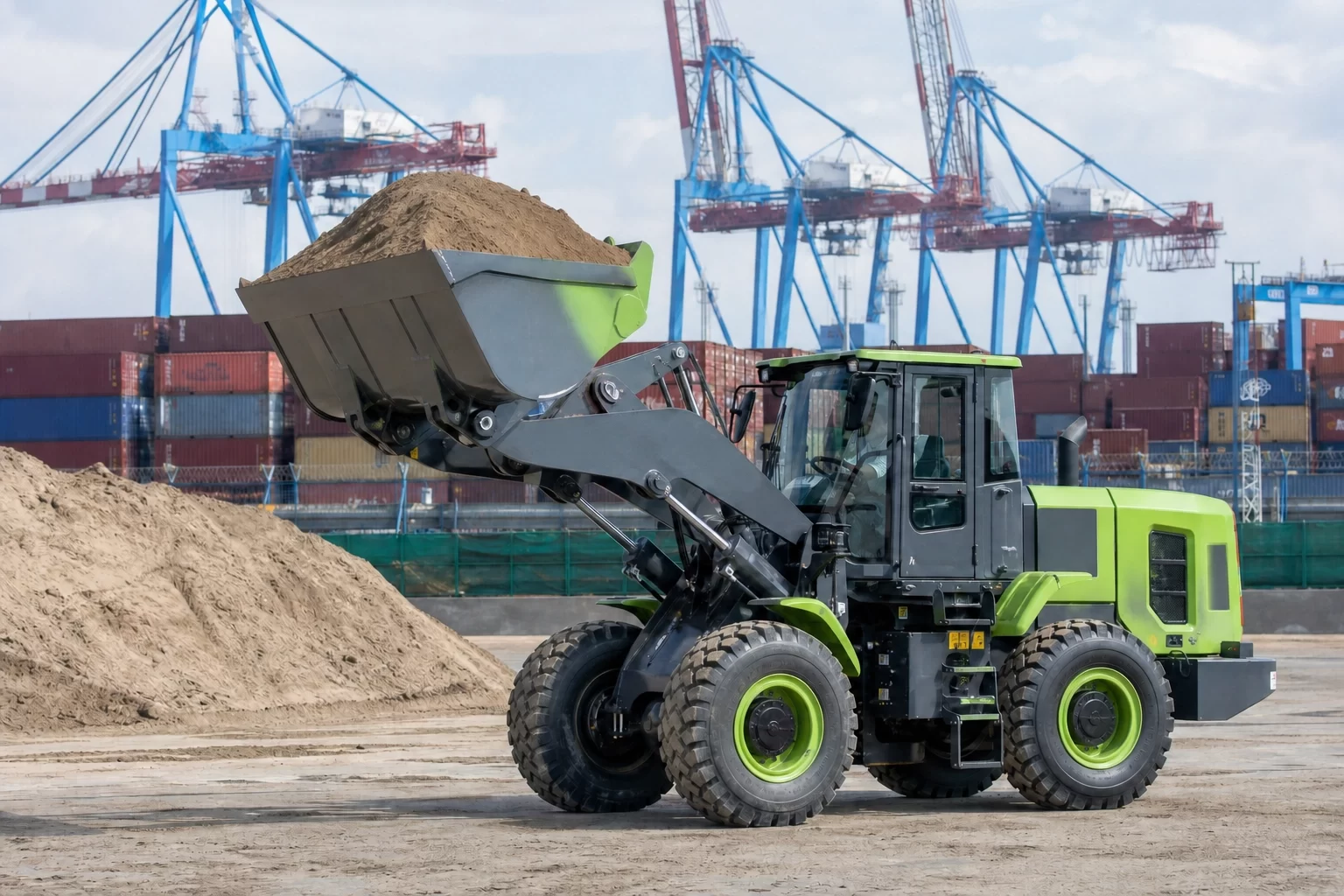
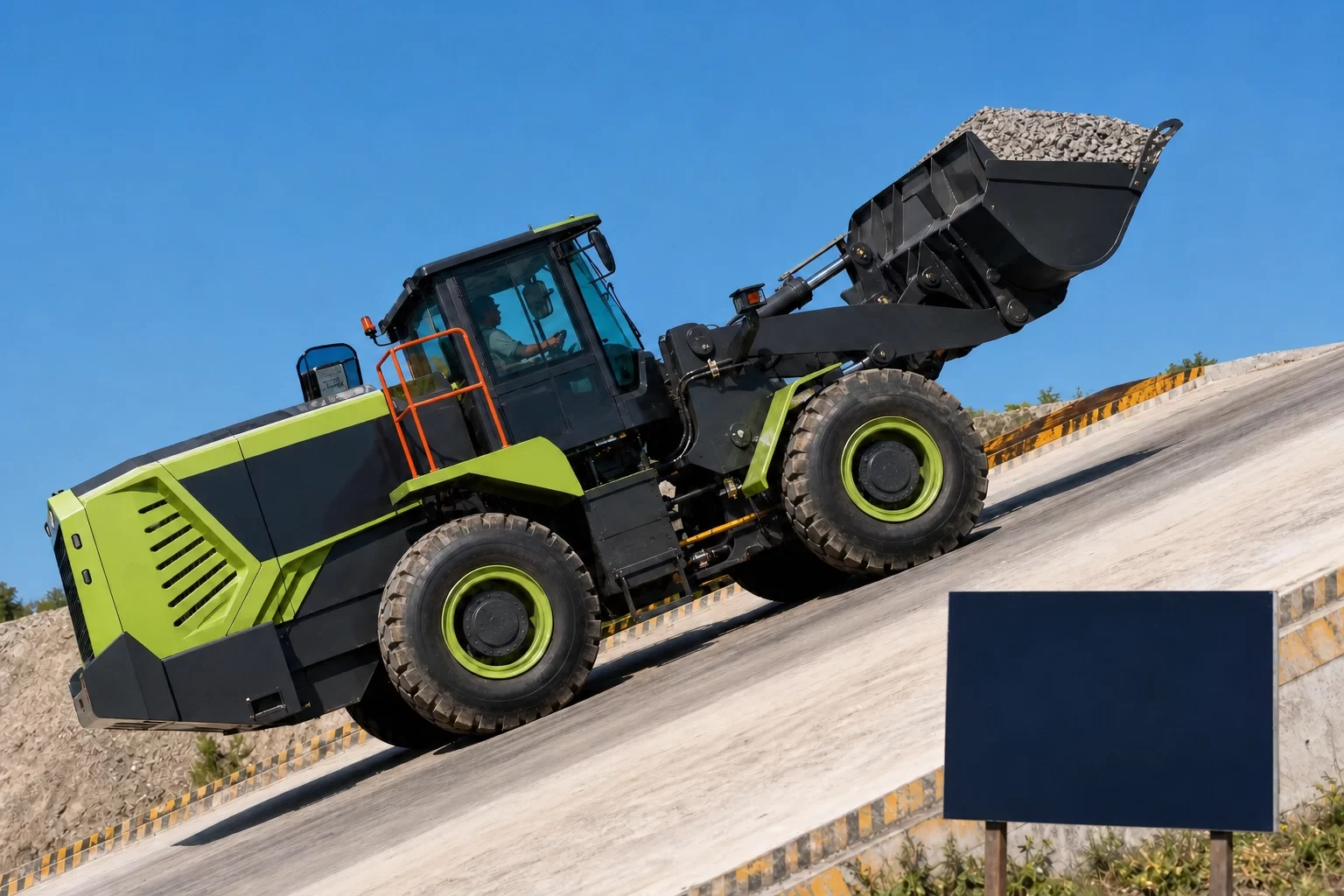
Following powertrain integration, prototype machines were deployed for validation at a regional port logistics facility involving continuous loading and transport operations.
Field Validation Summary
| Validation Item | Result |
|---|---|
| Full-Shift Endurance | Completed 8-hour shift with more than 10% battery remaining |
| Bucket Cycle Operation | Approximately 350 loading cycles |
| Gradeability | 20% incline with rated payload |
| Energy Cost Reduction | Approximately 65–70% lower than diesel |
| Drivetrain Reliability | No drivetrain maintenance events during initial validation |
| Operator Feedback | Reduced cabin noise and improved low-speed torque response |
Operating Efficiency
Compared with the original diesel platform, the electric wheel loader demonstrated significantly lower operating costs due to:
- Reduced energy cost per operating hour
- Elimination of engine idle fuel consumption
- Reduced drivetrain maintenance
- Fewer wearable powertrain components
Fleet operators also reported improved controllability during low-speed manoeuvring and loading operations.
Noise and Emissions Reduction
One of the major advantages observed during deployment was the substantial reduction in operating noise compared with conventional diesel-powered machinery.
This makes electric wheel loaders particularly suitable for:
- Urban construction projects
- Indoor logistics facilities
- Night-time operation
- Environmentally sensitive zones
- Port and warehouse applications
Zero local exhaust emissions also improve working conditions for operators and nearby personnel.
The project also demonstrates how advanced axial flux motor technologies and high-power-density PMSM systems are shaping the next generation of electric construction machinery with improved efficiency, lighter weight, and higher torque density.
Conclusion: the Future of Electric Construction Vehicles
This project demonstrates the successful electrification of a 10-ton wheel loader using Brogen’s high-voltage PMSM motor and EV powertrain technologies for demanding off-road applications.
The dual-motor architecture delivered full-shift operation, high breakout torque, and reliable performance while reducing operating costs, emissions, and maintenance requirements compared with conventional diesel machines.
With scalable electric powertrain solutions for construction and industrial equipment, Brogen continues supporting OEMs developing the next generation of efficient and zero-emission off-road vehicles.
Disclaimer: Project details shown are representative examples. Specifications and performance may vary depending on customer requirements and operating conditions. Some information may be adjusted to protect confidential project data.
Frequently Asked Questions
What type of motor is used in this electric wheel loader project?
The project uses a high-voltage permanent magnet synchronous motor (PMSM) from Brogen's commercial EV motor range for both traction drive and hydraulic power delivery.
Can the electric wheel loader complete a full working shift on one charge?
Yes, the loader was designed for full-shift operation of approximately 8–10 hours under typical quarry and port logistics duty cycles.
Why does the project use a dual-motor architecture?
The dual-motor layout separates traction and hydraulic functions, improving energy efficiency, hydraulic response, and overall machine performance during simultaneous driving and loading operations.
Is the electric powertrain suitable for harsh construction environments?
Yes, the motor and controller systems are designed for heavy-duty off-road applications with IP67 protection, water cooling, and high vibration resistanc
Can this electrification solution be adapted to other construction equipment?
Yes, the same EV powertrain architecture can also be applied to excavators, telehandlers, forklifts, mining equipment, and other off-road industrial vehicles.
 English
  Español
  Português do Brasil
  Türkçe
  日本語
日本語  Deutsch
  Français
  العربية
  한국어
한국어  Русский
  Italiano