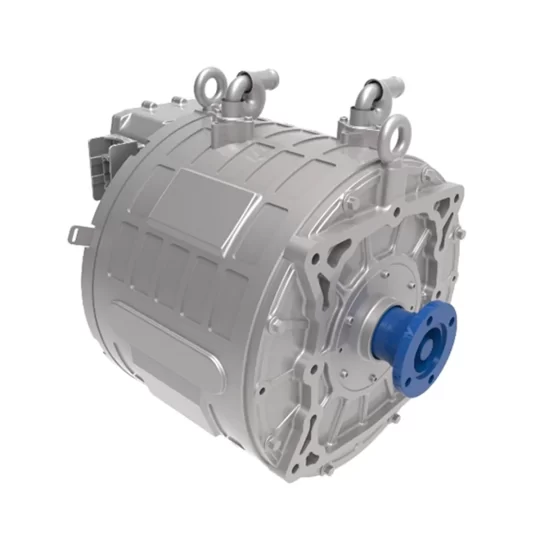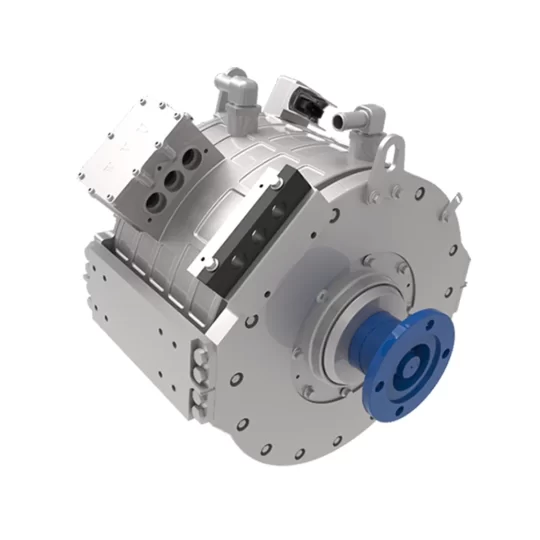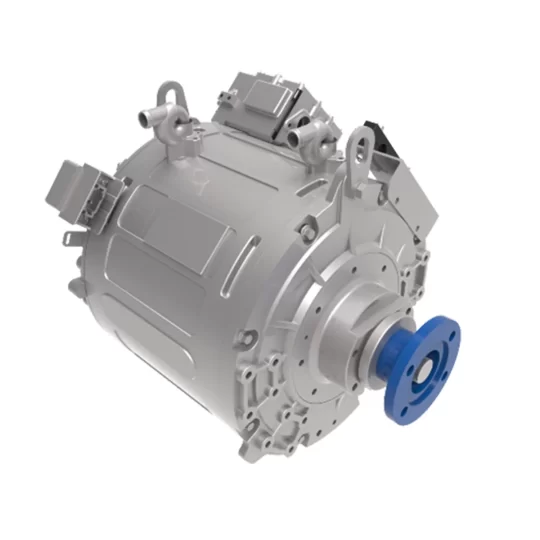
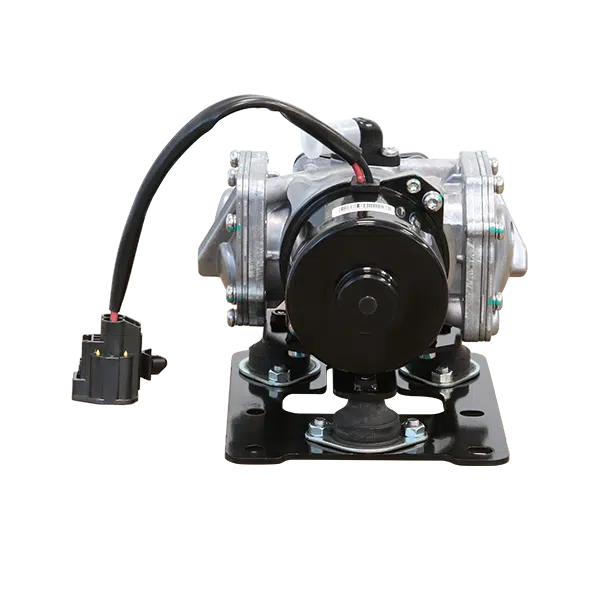
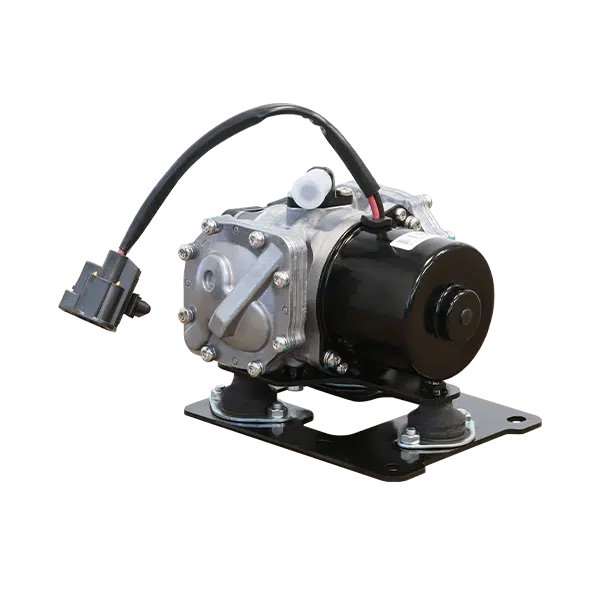
Electric Vacuum Pump

  • For HEV, BEV and FCV
  • Low Noise and Vibration Levels
  • Enhances Comfort and Safety
  • Lowers CO₂ emissions
SKU BGEN-ELECTRIC-VACUUM-PUMP Category Tag
Facebook
X
LinkedIn
Email

What is an Electric Vacuum Pump?

Electronic vacuum pumps designed specifically for passenger cars, which plays a crucial role in ensuring that braking systems operate optimally, providing an auxiliary or independent vacuum source for the vacuum booster of the braking system.

Vehicle Type

  • Passenger Car
  • SUV
  • Light Truck

Our Offerings

For specific product details or OEM solution discussion, kindly reach out to us.

Rated Voltage Current Working Temperature Vacuum Degree Noise Protection Class Weight
12 VDC ≤15 Ah -40℃~120℃ ≥88 kPa ≤65 dB (A) IP56 1.7 KG
24 VDC ≤12 Ah -40℃~110℃ ≥88 kPa ≤70 dB (A) IP65 1.9 KG
Snipaste 2026 05 19 15 48 01
Evaluate requirements and feasibility for optimal EV solution

Requirements Analysis

team discussion
Collaborate to develop technical solutions and specifications

Solution Design

IMG 5408
Develop, test, and validate customized EV systems reliably

Development & Production

delivery
Deliver worldwide with integration support and technical assistance

Global Delivery

Leading EV Powertrain Solutions Tailored for Commercial Vehicles

Our Solutions

Our Solutions
1

Electric Bus Solution

2

Electric Truck Solution

3

Light Commercial Vehicle Solution

4

Off-Highway Vehicle Solution

Proven Electrification Solutions Delivered Worldwide

Our Projects

Our Projects

FAQs

FAQs

What does Brogen supply for electric commercial vehicles?

Brogen supplies electrification components and systems across six families: EV charging (Level 2 AC, Level 3 DC and charger power modules), on-board power electronics (on-board charger, DC/DC converter, combined OBC + DC/DC system and integrated auxiliary inverter), electric steering (EHPS, EPS and RCB steering gear), electric braking (air brake compressor, vacuum pump), battery thermal management, and electric air conditioning. Every product is engineered for integration into a vehicle programme rather than as a stand-alone accessory.

Which vehicles are your products designed for?

Our components are used across commercial and specialty vehicles — bus and coach (including mini and mid-sized buses), heavy truck and tractor units, light commercial vehicles and light trucks, specialty and municipal vehicles such as construction machinery, sanitation vehicles and mining trucks, and for selected lines passenger cars and SUVs. If you tell us the vehicle type and platform, we will point you to the right product family.

Are your products compatible with both electric and conventional vehicles?

Yes. Steering systems are explicitly designed to be fitted to both fuel vehicles and new energy vehicles, and the on-board power electronics and charger range covers PHEV and BEV applications — with the electric vacuum pump supporting HEV, BEV and FCV as well. This makes the range suitable for electrification programmes that run alongside existing combustion platforms.

Can you customise a solution for our specific vehicle programme?

Yes. The range is built on platform and platforming designs rather than one-off parts, so a base platform can be scaled and configured to different vehicle types, power levels and voltage architectures. Customisable and adjustable control strategies are available, and tailored OEM solutions are offered for commercial vehicle applications.

How do your products integrate with the vehicle's control and communication systems?

Communication is native to the products rather than an add-on. Depending on the product, interfaces include CAN and CAN-FD and K-line protocols, and the combined on-board charger and DC/DC system provides real-time voltage and current data over the CAN bus for communication and status feedback with the BMS and VCU. Selected products also support online software upgrades and OTA updates, so control strategy can be refined after the vehicle is in service.

What protection and reliability features do your products include?

Protection is designed in at component level. Depending on the product this includes input and output overvoltage and undervoltage protection, short circuit protection, over-temperature protection, overcurrent protection, stalling protection, reverse-polarity protection and dry-running protection. Housings and sealing are engineered for demanding environments — dust and water ingress protection up to IP67 on applicable products, and operation designed to remain stable under extreme temperatures and high humidity.

How do your products help lower energy consumption and operating costs?

Several design choices work in the same direction. Power is drawn only when it is actually needed — for example the electric steering pump runs only when steering assistance is required, which improves fuel economy. High-efficiency conversion reduces energy losses, lightweight and integrated designs cut vehicle weight (the all-DC variable-frequency air conditioning system reduces overall system weight by more than 30%), and intelligent thermal management extends battery life and range.

Can the same product platform serve different markets and power configurations?

Yes. The range covers single-phase and three-phase input, 400 V and 800 V architectures, and different power and voltage configurations for global markets, with wide input ranges for worldwide usage. Because products share platform architectures, a design validated for one market can be adapted for another instead of starting from scratch.

How do we obtain the exact specification for our application?

The specifications published on this page describe the general range for this product category. To confirm the exact model — including power level, voltage window, cooling method, mounting and interface — send us your vehicle parameters (battery voltage architecture, power requirement and installation constraints) and we will specify the configuration that matches. A product manual is available for download on each product page for preliminary engineering review.

Why choose Brogen as an electrification partner?

Three reasons. First, breadth — charging, on-board power electronics, steering, braking, thermal management and air conditioning can be sourced from one partner, which reduces supplier complexity and interface risk. Second, platform thinking — the designs are modular and scalable, so they adapt to a wide range of vehicle types and configurations. Third, engineering responsiveness — advanced control concepts and intelligent algorithms give broad vehicle model compatibility, enabling fast matching and rapid development cycles.

Send an Inquiry


    Select the fields to be shown. Others will be hidden. Drag and drop to rearrange the order.
    • Image
    • SKU
    • Rating
    • Price
    • Stock
    • Availability
    • Add to cart
    • Description
    • Content
    • Weight
    • Dimensions
    • Additional information
    Click outside to hide the comparison bar
    Compare
    Compare ×
    Let's Compare! Continue shopping