
The selection of an electric drive axle is a critical step in the development of electric trucks. For OEMs and fleet operators, it plays a central role in vehicle performance, efficiency, and long-term durability. Today, e axles are widely deployed in both regional distribution and long-haul applications. Understanding different eaxle architectures enables engineering teams to define the most appropriate eaxle system for real-world operating conditions.
What Is an Electric Drive Axle?
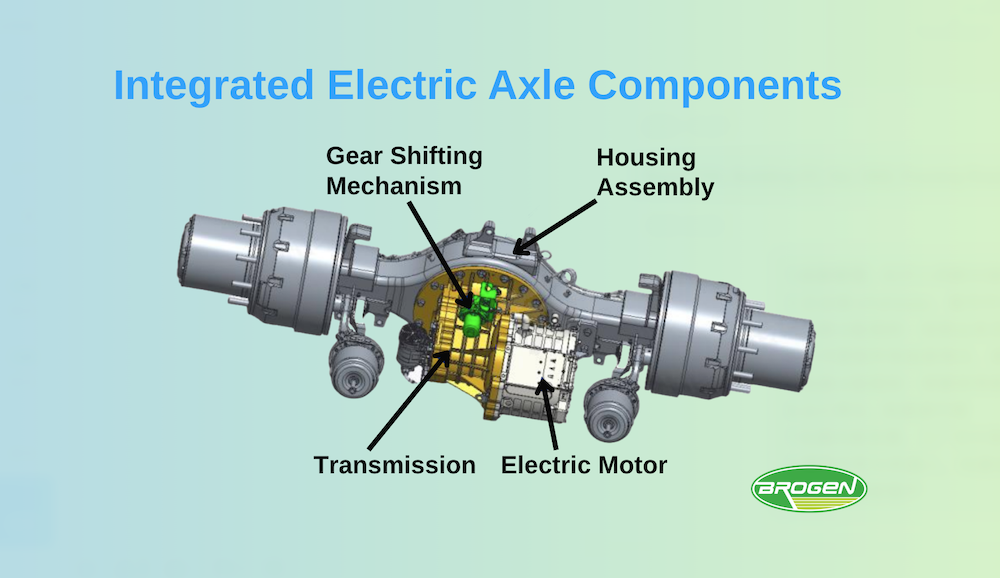
An electric drive axle, integrates the electric motor and drivetrain into the axle assembly. Compared with conventional drivetrains, electric axles reduce mechanical complexity and improve overall efficiency.
Modern eaxle technology enables high torque output at low speed. This is essential for heavy payloads and frequent stop-start operation. As a result, many manufacturers now focus on optimized designs for heavy-duty electric trucks.
What Types of Electric Axles Are Used in Heavy Trucks?
For electric heavy-duty trucks, electric drive axles are generally classified into two main categories:
- Side-mounted electric drive axles
- Integrated electric drive axles
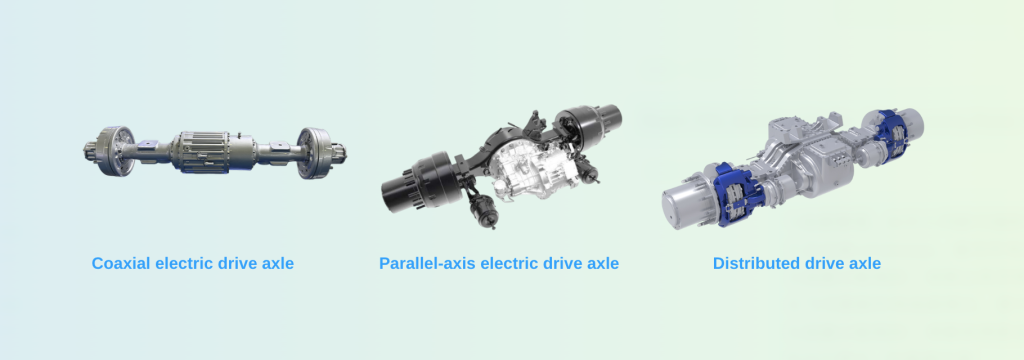
An integrated electric drive axle is not a single design. Based on the motor layout, it can be further divided into several common types:
- Coaxial electric drive axle
The motor is arranged coaxially with the main reduction gear. This layout is compact, has a short power transmission path, and delivers high efficiency. It is well suited for heavy trucks with tight axial space constraints. - Parallel-axis electric drive axle
The motor is arranged parallel to the axle shaft. This configuration offers greater flexibility in gear design and is often used in applications that require multi-speed transmissions and a wide operating speed range. - Distributed drive axle
This design uses dual or multiple motors, typically positioned on both sides of the axle or closer to the wheel ends. It enables more precise torque control but comes with higher system complexity and cost.
The key difference lies in motor placement and power transmission paths, which directly affect efficiency, packaging, weight distribution, and manufacturing complexity. For this reason, electric drive axle selection should go beyond choosing between side-mounted and integrated designs and focus on identifying the most suitable integrated architecture for the truck’s actual operating conditions.
When Does a Side-Mounted E-Axle Make Sense?
A side-mounted electric drive axle uses a conventional axle housing, with the motor and gearbox mounted externally on the axle side. This architecture is commonly used in cost-sensitive programs.
The main advantage of side-mounted axles is simplicity. Manufacturing and maintenance are relatively straightforward. For short-distance routes and moderate payloads, this layout can be a practical solution.
However, external mounting creates uneven mass distribution. Under rough road conditions, long-term durability may be affected. In addition, most side-mounted eaxle systems use two-speed transmissions, which limits efficiency across a wide speed range.
Why Is the Integrated Electric Drive Axle Becoming Mainstream?
An integrated electric drive axle combines the motor, gearbox, reduction gear, and differential into a compact central unit. This design improves load balance and reduces packaging space.
Integration delivers clear benefits:
- Balanced weight distribution
- Compact installation
- Support for multi-speed gear ratios
Because of these advantages, integrated electric axles are widely adopted in long-haul and high-GVW electric trucks. Although development cost is higher, the system offers better lifetime efficiency and reliability.
How Should OEMs Choose?
Choosing the right products depends on real operating conditions, not peak power numbers.
Side-mounted electric truck axles are suitable for:
- Short or regional routes
- Lower payload requirements
- Cost-focused vehicle platforms
Integrated electric drive axles are better for:
- Heavy-duty and long-haul trucks
- High torque and efficiency demands
- Platforms with limited packaging space
Experienced manufacturers evaluate duty cycle, axle load, and vehicle layout before recommending an suitable solution. As battery capacity increases, compact eaxles help reduce system weight and free installation space.
Conclusion
There is no single best eaxle for every truck. Side-mounted electric drive axles offer a cost-effective entry point. Integrated electric drive axles deliver stronger long-term performance for demanding applications. OEMs should consider the real-world operating needs, not marketing claims.
For OEMs evaluating next-generation powertrain architectures, it is also worth understanding how distributed electric drive axles are reshaping vehicle control and efficiency. We explore this topic in detail in our next article on distributed electric drive axles for heavy-duty trucks.
Have A Discussion with Brogen Team
If you are developing an electric heavy-duty truck and need engineering-level support for e-axle selection and system integration, our team is ready to collaborate.
Reach out to our experts at inquiry@brogenmotors.com. For the latest news please view Brogen’s Linkedin. For more videos please click Brogen’s Youtube. Find more about Brogen’s ev solutions for commercial vehicles.

 English
  Español
  Português do Brasil
  Türkçe
  日本語
日本語  Deutsch
  Français
  العربية
  한국어
한국어  Русский
  Italiano