


Requirements Analysis

Solution Design

Development & Production

Global Delivery


Our Solutions
Our Projects
FAQs
How does the range extender work with the vehicle battery?
The system continuously monitors battery status and vehicle power demand. When required, the engine-driven generator automatically produces electricity and operates in constant-voltage or load-following mode to maintain battery performance and extend driving range.
Can the range extender be integrated with different battery voltages?
Yes. DSM range extender systems support a wide DC voltage range, typically from 144V to 750V depending on the model. This allows compatibility with various electric vehicle architectures and battery pack configurations.
What communication protocols are supported?
All systems support CAN 2.0 communication for integration with vehicle control units (VCU), battery management systems (BMS), and other onboard controllers. Protocol customization can also be supported for specific OEM requirements.
Can you develop a battery system based on my specific requirements?
Yes. We follow a process of requirement analysis, feasibility evaluation, engineering coordination, proposal & quotation, and project development. We work closely with your engineering team to ensure the solution meets your specifications.
Which vehicles are suitable for these range extender systems?
Range extenders are widely used in electric buses, light commercial vehicles, municipal vehicles, specialty equipment, utility vehicles, and heavy-duty trucks that require extended operating range without increasing battery capacity.
What are the advantages of the integrated 5-in-1 design?
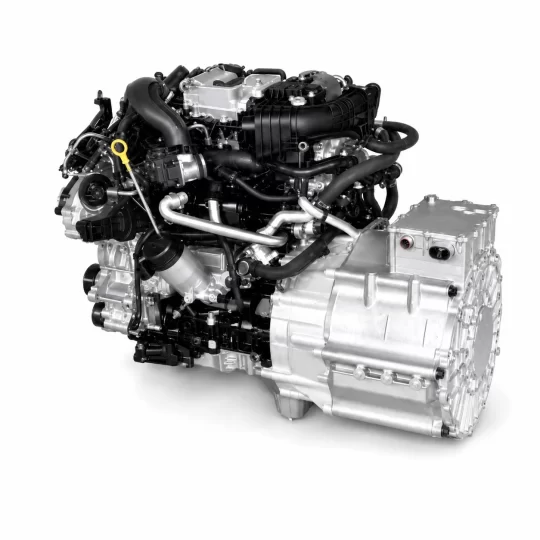
The 5-in-1 architecture combines the engine, generator, ECU, GCU, RCU, and wiring harnesses into a compact package. This simplifies vehicle integration, reduces installation time, saves space, and improves overall system reliability.
Can the system operate in extreme temperatures?
Yes. Depending on the model, DSM range extenders can support cold starts down to -40°C and reliable operation in high-temperature environments. Integrated thermal management ensures stable performance across demanding operating conditions.
Does the system include battery protection functions?
Yes. The controller automatically adjusts operating modes when battery SOC becomes critically low or battery temperature falls outside recommended ranges, helping protect battery health and extend overall battery service life.
Is remote diagnostics available?
Yes. Selected models support GPRS-based remote monitoring, calibration, and diagnostics. Fleet operators can access operating data, monitor system status, and troubleshoot issues remotely to reduce maintenance costs and downtime.
How do I choose the right range extender power rating?
The ideal power rating depends on vehicle weight, battery capacity, duty cycle, and operating conditions. Smaller vehicles typically use 10–20 kW systems, while buses and heavy-duty applications often require 35–75 kW configurations.
What fuel options are available?
DSM offers both gasoline and diesel range extender systems. Gasoline models are suitable where fuel availability and emissions requirements are priorities, while diesel models generally provide higher fuel efficiency and lower operating costs.