Due to the technical characteristics of axial flux motors, such as compact structure, flat and ultra-thin, small size, light weight and high-power density, many developers have worked hard to improve this technology in the past decade to have gradually suitable for new application scenarios such as electric motorcycles, airport pods, cargo trucks, electric vehicles, and even electric aircraft.
The design of a new axial flux motor typically improves the torque density by more than 30% compared with the design of a traditional radial flux motor.
The current research hotspots (i.e., technical trends) for this type of motor in the field of electric vehicles is to improve efficiency, reduce costs, system integration and NVH improvement.
The innovation of axial flux motor technology mainly lies in structural design and has essentially overcome the key technological barriers in thermal management, advanced materials and batch production processes.
Challenges faced by axial flux technology
Although axial flux motors have technical advantages and after years of technical research, the industry has mastered the working principle of new axial flux motors and has basically broken through the key technologies of configuration and structural design, electromagnetic performance design, thermal performance design, calibration and control strategy development.

Widespread application will take some time before it can be applied in large quantities, and a series of technical challenges in design and production need to be overcome.
1. Immature manufacturing equipment
Because of the lack of research accumulation, the industry has a poor understanding of the manufacturing methods of axial flux motors, manufacturing equipment is not easy to obtain, and the industrial chain is not perfect.
2. High manufacturing precision requirements
Axial motors must maintain a uniform air gap between the rotor and stator because the magnetic force is much higher than that of radial flux motors.
Considering that it is also difficult to adjust the air gap during motor manufacturing, it is necessary to accurately control the manufacturing tolerances of key components.
3. Difficult thermal management and thermal design
The axial flux motor adopts a sandwich structure. The intermediate stator of the dual-rotor axial flux motor and the intermediate rotor of the dual-stator axial flux motor is difficult to dissipate heat. In addition, due to the high specific power characteristics of the axial flux motor, the heat capacity is also very small, which leads to extremely serious heating problems.
It is necessary to adopt new heat dissipation methods such as immersion oil cooling, oil-water composite cooling, liquid nitrogen cooling and phase change material cooling, and design extremely complex cooling and sealing structures.
4. Complex materials and processes lead to high costs
For radial flux motors, the cost of magnets, silicon steel, copper, structural parts as well as the process cost of mass production have been recognized by the industry.
However, the industry has insufficient knowledge of the new materials and new processes used in the new axial flux motor. The R&D investment cost can be reduced, but the low maturity of industrialization, high cost, and high uncertainty in cost are the biggest obstacles to the mass production of the new axial flux motor.
Applied to high-end supercars
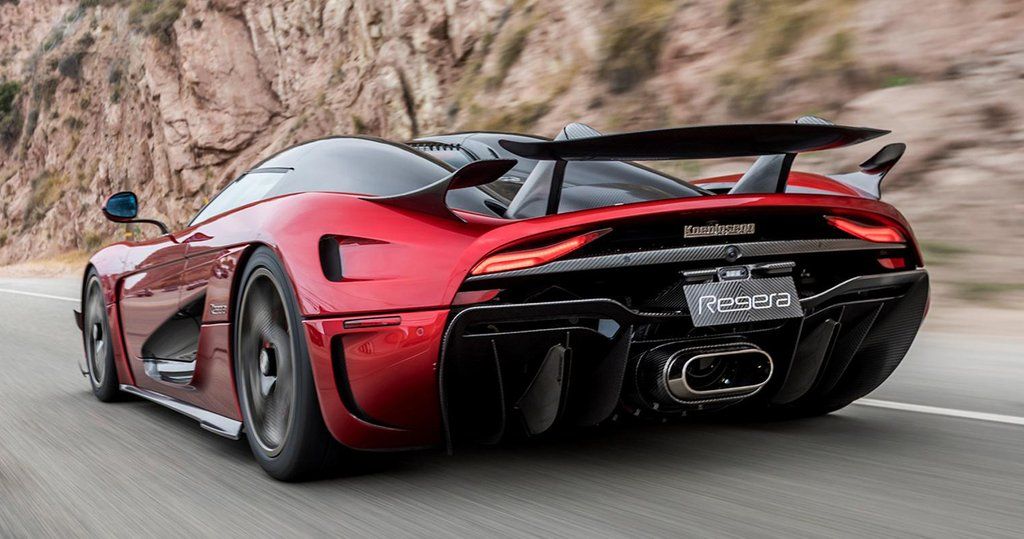
For example, the Swedish Koenigsegg Regera and Hongqi S9 supercars are equipped with three motors provided by YASA MOTORS, of which two YASA 750 motors are located on the left and right axles of the rear axle to directly drive the wheels, and the other YA-SA 400 motor is located at the front end of the engine and connected to the engine crankshaft to supplement the engine’s power output.
On July 22, 2021, Mercedes-Benz officially announced its new electrification strategy plan.
According to the plan, Mercedes-Benz will launch three new pure electric vehicle architectures in 2025. Mercedes-Benz will cover all medium and large passenger cars and establish a scalable modular system as the backbone of the future electric product portfolio. It will be a dedicated high-performance electric vehicle platform, providing solutions for technology- and performance-oriented Mercedes-AMG models.
VAN.EA provides support for electric vans and light commercial vehicles.
At the same time, Mercedes-Benz announced the acquisition of YASA, a next-generation electric drive technology company. YASA became a wholly owned subsidiary of Mercedes-Benz and will provide electric motors for Mercedes-Benz’s pure electric platform, trying to redefine future driving performance with electric motors with higher power density and continuous torque output. This is bound to push the research on new axial flux motor technology for automotive electric drives to a new level.
About Brogen:
En Brogen, nos comprometemos a ofrecer Soluciones EV. Las respaldamos con nuevas tecnologías para ayudar a las empresas de VE a prosperar y promover la sostenibilidad medioambiental. Brogen ofrece un servicio Solución EV Powertrain para vehículos comerciales.
Hemos forjado alianzas estratégicas con actores clave del sector de los vehículos de nueva energía, entre ellos motor eléctrico y controladores, fabricantes de baterías y proveedores de estaciones de carga. También colaboramos con proveedores de componentes esenciales como Batería de coche eléctrico, motor para vehículos eléctricos (motor PMSM), controlador del motor, OBC+DCDC+PDU, motor de flujo axial, BMS, sistemas de aire acondicionado, compresores de aire y sistemas de dirección asistida.
Hemos suministrado soluciones eléctricas de alta calidad a más de 100 clientes en más de 20 países.
Póngase en contacto con nuestros expertos
¿Le interesa potenciar su proyecto de VE? Póngase en contacto con nuestros expertos en inquiry@brogenmotors.com. Nos comprometemos a responderle en un plazo de dos días laborables.
Para ver más vídeos, haga clic en Youtube de Brogen.
Para conocer las últimas noticias, consulte Linkedin de Brogen.
 English
  Español
  Português do Brasil
  Türkçe