Due The electric drive system is one of the three core systems of electric vehicles and serves as the primary propulsion system. Its characteristics are pivotal in determining the vehicle’s key performance indicators, directly influencing its power, efficiency, and the overall driving experience.
Three-in-One Electric Powertrain System Technologies
The term “three-in-one” (3 in 1) refers to the integration of electric motor, motor controller, and the reducer into a single unit. This integration aims to reduce weight and volume while increasing power and torque density. It also offers significant benefits in terms of NVH (Noise, Vibration, and Harshness) and EMC (Electromagnetic Compatibility). From a power and economy perspective, this integration is considered a significant advantage.
As electric vehicle technology continues to develop, the trend towards integrated design is expected to shape the future of development.
System Structure of the Three-in-One Drivetrain System
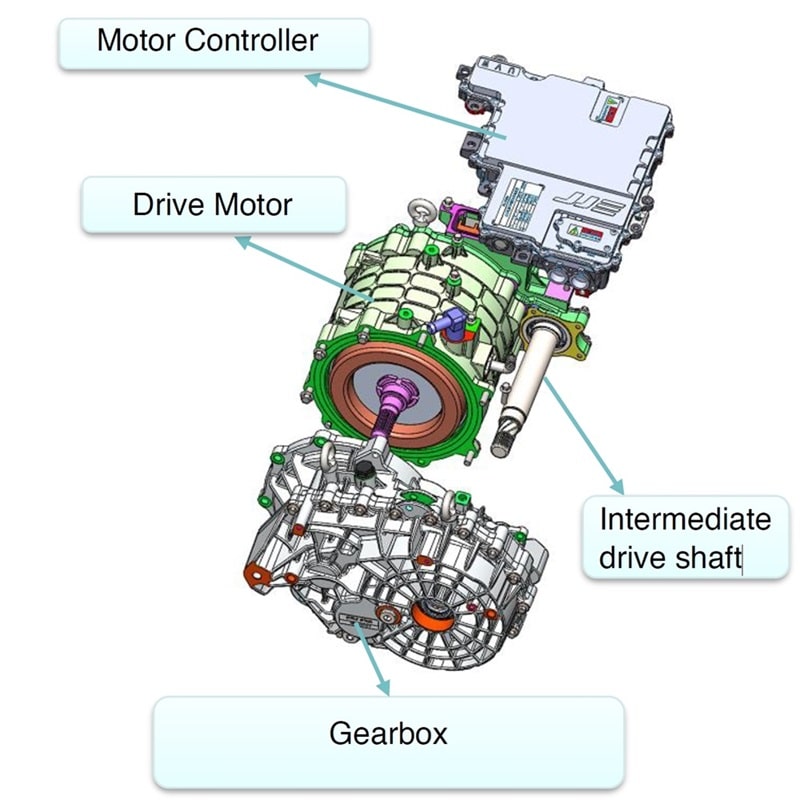
The three-in-one electric drive system comprises a drive motor, a motor controller (MCU), and a reducer (Gear Box). These components are interconnected with the vehicle’s other systems through high and low voltage wiring harnesses and cooling pipes.
Development Goals of the Three-in-One Electric Drive System
The development of the electric drive system is guided by the requirements set by the vehicle as a whole. Key development goals include:
- High Efficiency: To enable the vehicle to travel further on the same battery capacity.
- Long Lifespan: Aiming for a lifespan of 15 years or more.
- Bajo mantenimiento: Ideally, maintenance-free operation.
- Performance: Achieving maximum acceleration, speed, and climbing grade that meet regulatory standards.
- Diseño compacto: Small size and lightweight construction.
- Reliability: Robust operation with resistance to high temperatures, vibrations, and protection against water and dust.
- EMC: Minimizing electromagnetic radiation and ensuring good electromagnetic compatibility.
- Low Noise: Maintaining a quiet operation.
Brogen’s 3 in 1 Powertrain System for Heavy-Duty Trucks
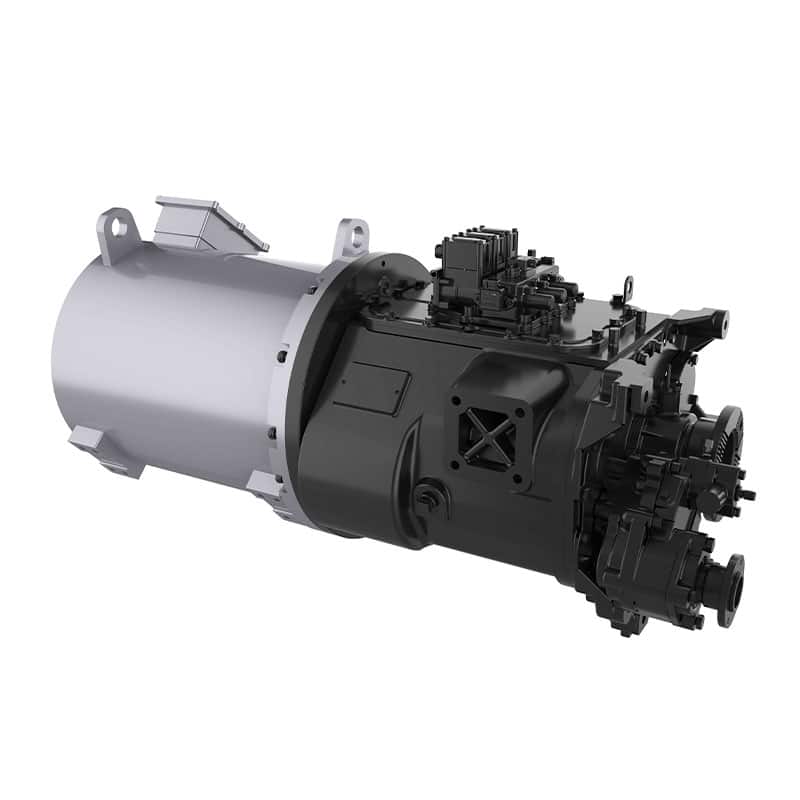
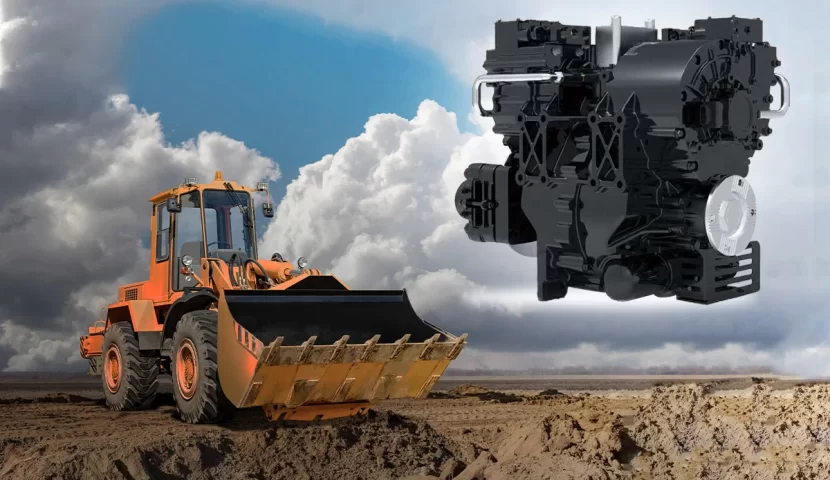
Brogen supplies premium 3 in 1 powertrain system for heavy-duty trucks. Below is product’s picture and its specifications.
| Item | Parámetros | |
| Motor | DC voltage platform (V) | 637 |
| Rated/Peak power (kw) | 200/300 | |
| Rated torque (N.m) | 1300 | |
| Rated/Peak speed (rpm) | 1469/2800 | |
| Protection level | IP67 | |
| Cooling form | Water Cooling | |
| Controlador del motor | Applicable motor type | Permanent magnet synchronous motor |
| Applicable voltage range (VDC) | 400-750V | |
| Rated voltage (VDC) | 637 | |
| Rated/Peak capacity (KVA) | 233/406 | |
| Low-voltage power supply input voltage range | 18-36V | |
| Gearbox | Speed ratio | 8.507/4.943/2.994/1.876/1.216/1 |
| Pneumatic shift pressure (bar) | 8-10 |
Development Trends of the Three-in-One Drive System Technology
1. Platformization and Modularization
This approach reduces the complexity of the vehicle and its components, leading to cost savings. For instance, a car company might introduce an e-platform electric drive system with highly integrated components, offering a range of products to cater to different power needs and vehicle models.
2. High Integration
This involves a transition from fully separated structures to shared housing for the motor and reducer, and eventually, to a shared housing for the motor, controller, and reducer. This design reduces part count, volume, and weight, thereby lowering costs.
3. High Speed and High Density
High-speed motors can conserve expensive permanent magnet materials and reduce motor size, which is beneficial for enhancing power and torque density and reducing manufacturing costs.
4. Coaxial Input and Output
The coaxial planetary gear system, compared to the parallel shaft gear system, offers advantages in compactness, which aids in maximizing system power and torque density.
5. Integrated Multi-Speed Reducer
The current solution for the three-in-one integrated electric drive system often involves a traditional single-speed two-stage reducer. However, a multi-speed transmission system can expand the motor’s high-efficiency range, reduce energy consumption, and potentially increase driving range.
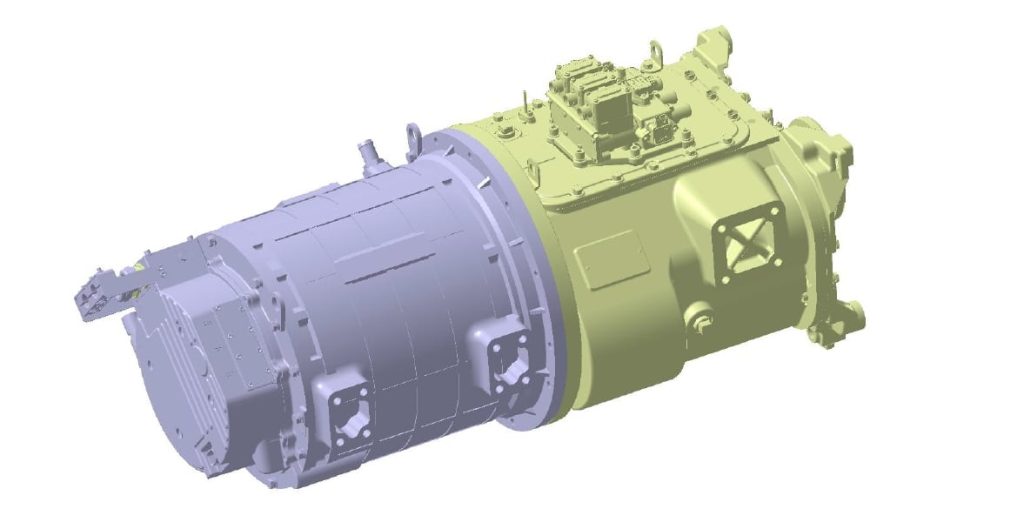
Advantages of the Three-in-One Electric Drive System
- Platformization: Different series platform products cater to various vehicle weights, powers, and torques.
- High Efficiency: The drive system’s NEDC comprehensive efficiency, including the reducer, can reach 88%, with peak efficiencies exceeding 92%.
- High Integration: The assembly volume is reduced by 30%, and the power density reaches 1.9kW/kg.
- High Speed: The maximum speed can reach 16,000rpm.
- Low Noise: The near-field noise of the assembly does not exceed 85dB.
- NVH Performance: NVH performance is ensured by controlling gear meshing accuracy and enhancing shell strength.
- Power: Meets the power performance requirements of various vehicle classes.
- Reliability: Simplifies interfaces and improves overall reliability.
Disadvantages of the Three-in-One Electric Drive System
- NVH Challenges: High speeds can introduce NVH issues.
- Cooling and Bearing Selection: High-speed operation raises concerns about cooling concepts and bearing selection.
- EMC Complexity: The integrated design increases the complexity of electromagnetic compatibility.
- Cross-Component Development Collaboration: The integrated system can make collaborative development across components more challenging.
Internal Integrated Designs of the Three-in-One Electric Drive System
- Direct connection of the electric control terminal, eliminating the need for three-phase lines; direct connection of the motor and electric control signal harness, eliminating external wiring.
- The motor and controller share a water channel, reducing the need for external connecting pipes.
- The motor housing and reducer housing are integrated into a single unit.
- The motor rotor shaft and the reducer input shaft feature an oil guide and return design to enhance spline lubrication.
- The control board and the drive board are consolidated into a single board structure.
- The IGBT and capacitor are arranged in a stacked configuration to reduce the size of the MCU.
- Improvements in gear processing and a reduction in the center distance by 30mm.
- The “hidden” integrated design of the parking motor.

Acerca de Brogen
En Brogen, nos comprometemos a ofrecer Soluciones EV. Las respaldamos con nuevas tecnologías para ayudar a las empresas de VE a prosperar y promover la sostenibilidad medioambiental. Brogen ofrece un servicio Solución EV Powertrain para vehículos comerciales.
Hemos forjado alianzas estratégicas con actores clave del sector de los vehículos de nueva energía, entre ellos motor eléctrico y controladores, fabricantes de baterías y proveedores de estaciones de carga. También colaboramos con proveedores de componentes esenciales como Batería de coche eléctrico, motor para vehículos eléctricos (motor PMSM), controlador del motor, OBC+DCDC+PDU, motor de flujo axial, BMS, sistemas de aire acondicionado, compresores de aire y sistemas de dirección asistida.
Hemos suministrado soluciones eléctricas de alta calidad a más de 100 clientes en más de 20 países.
Póngase en contacto con nuestros expertos
¿Le interesa potenciar su proyecto de VE? Póngase en contacto con nuestros expertos en inquiry@brogenmotors.com. Nos comprometemos a responderle en un plazo de dos días laborables.
Para ver más vídeos, haga clic en Youtube de Brogen.
Para conocer las últimas noticias, consulte Linkedin de Brogen.
 English
  Español
  Português do Brasil
  Türkçe